

_________________________
Sentience vs. Sapience
Sentience -- root word means "feeling"
- Having experiences of any sort, being conscious
- Having valenced (good vs. bad) experience
- pain (bad), pleasure (good)
- positive emotions: fun, love, excitement
- negative emotions: fear, anxiety
- Living in a particular "sensory bubble"
- seeing, smelling, hearing, etc.
- other senses in other animals

Sapience -- thinking of various kinds (could be unconscious)
- self-awareness
- awareness of past and future
- reason, rationality, intelligence
- morality
- communication, language

Today and Monday: sentience
Wed and Fri: sapience
_________________________
Today's reading -- "Animal Sentience," Heather Browning and Jonathan Birch

Background
- There is already some animal welfare legislation protecting some species
- Question: should more species be protected?
- Is there sentience in fish, octopuses, lobsters, insects, etc?
- They focus on pain mostly
- But we will be interested in all sorts of sentience
_________________________
Butterfly field trip
_________________________
Sentience in fish
- what is it like to be a salmon swimming upstream to spawn? Is it exhilarating? Exciting? Do they feel tired? -- VIDEO
- what is it like to be farmed salmon? Do they feel crowded? Frustrated? (zugunruhe in birds)

- to think of fish as a "subject of a life" (Regan's term) it would be helpful to understand all their feelings
- but the study of sentience tends to focus on one feeling: pain

_________________________
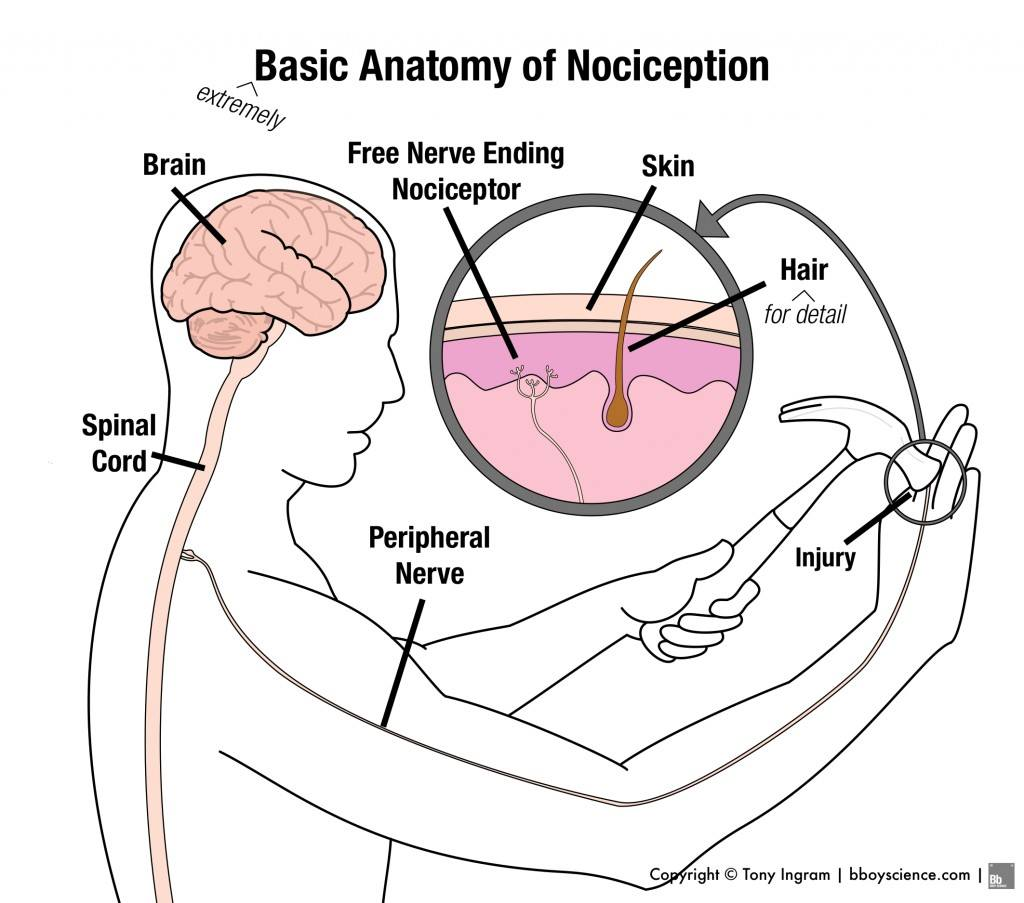
- starts with nociceptors--peripheral neurons that respond to damage; in skin, many areas of body -- thermal, mechanical, chemical, polymodal (wikipedia)
- nociceptors lead to brain, where pain is felt
Nociception without a feeling of pain
- body damaged while you're focused on playing a sport
 |
| Price DD. Psychological and neural mechanisms of the affective dimension of pain. Science. 2000 |
Do animals have nociceptors?
Do they have pain experience?
_________________________
Lynne Sneddon articles; Victoria Braithwaite, Can Fish Feel Pain?
- nociceptors (22 in face alone) -- trout dissected
- pathways to brain -- dissection, study under microscope, electrical stimulation
- after vinegar/bee venom injection (nociception) do they FEEL pain?
- they rub snout on gravel on sides of tank
- elevated heart rate and respiration and reduced hunger
- altered behaviors -- less avoidant of novelty
- they seek painkillers
- morphine changes these behaviors

Area of uncertainty
- But a very different brain--does that matter?
- Just a few species studied


_________________________
Invertebrates--a totally different kind of nervous system
- Cephalopod molluscs--octopuses, squid
- Evidence of pain similar to fish
- but does the pain signal go to the animal's central brain or just to local brain in one arm?

- Decapod crustaceans--lobsters, crabs
"The presence of nociceptors has not yet been conclusively established, though there is evidence of the detection of extreme heat" (Browning and Birch pg. 3)

- Insects
"Insects will continue normal feeding and mating behaviours even when severely injured" (Browning and Birch p. 4)
"We should be open to the possibility that the traditional focus on pain in this literature
does not serve insects well. There are, of course, affects other than pain. For example, bees will show a ‘pessimistic’ judgement bias after being shaken" (Browning and Birch p. 4)

_________________________
Ethics when there's room for doubt
- "precautionary reasoning about sentience" (Browning and Birch pg. 5)
- if the lobster might feel pain, don't throw them in boiling water
- Boiling lobsters alive to be banned in UK, already banned in some countries
- "might" is enough to justify laws protecting animals at "the edge of sentience"
_________________________
Next time: sentience beyond pain ... what are animals sensing and feeling?